You’re more than a week out from your procedure, the swelling has mostly settled, and yet there’s still a nagging ache at the back of your jaw. If you’re dealing with pain 10 days after wisdom teeth removal, it’s natural to wonder whether your recovery has stalled or something has gone wrong.
It’s one of the questions we hear most often from patients in the fortnight after surgery, so you’re far from alone.
The short answer: a little lingering tenderness can be part of normal healing, especially after a tricky extraction. But the ten-day mark is a sensible checkpoint.
By now, most of the discomfort should be fading rather than building. Here’s how to tell the difference between ordinary healing and a problem worth a phone call.
The short answer
For a straightforward extraction, the worst of the swelling and soreness settles within three to five days. Your gum tissue knits closed over roughly one to two weeks, and the bone underneath continues to fill in for several weeks to a few months.
From what we see day to day, the timeline is fairly predictable once we know whether a tooth was simple or surgical to remove. You will not feel that final stage, and it does not stop you from getting on with daily life.
What a normal recovery looks like
For most people, the soreness follows a fairly predictable pattern:
- Days 1 to 2: The most tender stage, often with swelling and a stiff jaw.
- Days 3 to 4: Swelling tends to peak, then starts to settle.
- Days 5 to 7: Pain eases into a dull ache, and you can usually get back to your routine.
- Day 8 onwards: Any soreness should be mild and steadily getting better.
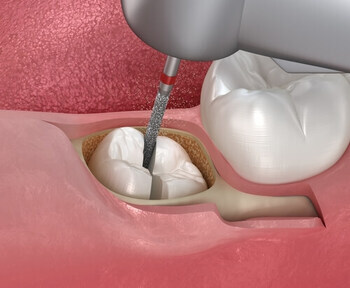
A surgical or impacted extraction stirs up more of the surrounding gum and bone, so it’s common for that area to feel tender for a touch longer. The patients we treat for the trickier impactions almost always take a few extra days to feel like themselves again, and that’s perfectly expected. The keyword is improving: pain that eases a little each day is a good sign, even if it hasn’t fully gone by day ten.
Is pain 10 days after wisdom teeth removal normal?
Mild, fading soreness at this stage is usually nothing to worry about. Your gum and the underlying bone are still knitting back together, and that quiet healing can produce the odd twinge for a couple of weeks. If the ache is steady but slowly shrinking, you’re most likely on track.
📖 People also read about:
To keep yourself comfortable in the meantime, stick to soft foods, keep your fluids up, and rinse gently with warm salt water a few times a day.
Over-the-counter pain relief usually takes the edge off, and an extra pillow at night can ease any throbbing. Steer clear of straws, smoking, and vigorous swishing, since the suction and pressure can disturb the healing socket.
What you don’t want to ignore is pain that suddenly gets worse, throbs, or spreads toward your ear after you’d already started to feel better.
In the chair, that shift from steady improvement to a fresh flare-up is the pattern that tells us to take a closer look. If you had your wisdom teeth removal in Dubbo with us, a quick check lets us examine the socket and set your mind at ease.

Why pain can linger at the ten-day mark
A few things can keep an extraction site sore for longer than expected:
- Dry socket: When the protective blood clot dislodges too early, the bone underneath is left exposed. It causes a sharp, deep ache that can travel to the ear, often with a bad taste or odour.
- Infection: Trapped food or bacteria can lead to swelling, tenderness, and sometimes a low fever.
- Small bone fragments: Tiny pieces of bone occasionally work their way to the surface as you heal, irritating the gum until they clear.
- Jaw stiffness: Muscle tension from holding your mouth open during surgery can leave the jaw sore and slow to loosen.
Most of these are simple to settle once your dentist has had a look, so it’s better to ask than to sit it out and hope.
📖 People also read about:
When to call your dentist
Book a check if you notice any of the following:
Worsening or throbbing pain, ongoing swelling, a foul taste or smell, pus, a fever, or numbness that hasn’t faded. These can point to dry socket, infection, or another issue that needs attention.
💡 Need help?
We offer professional dentures services to help you achieve your goals.
Catching these early keeps a small problem small and gets you comfortable again far sooner. There’s no such thing as a silly question when it comes to your recovery.
Gentle, reassuring care close to home
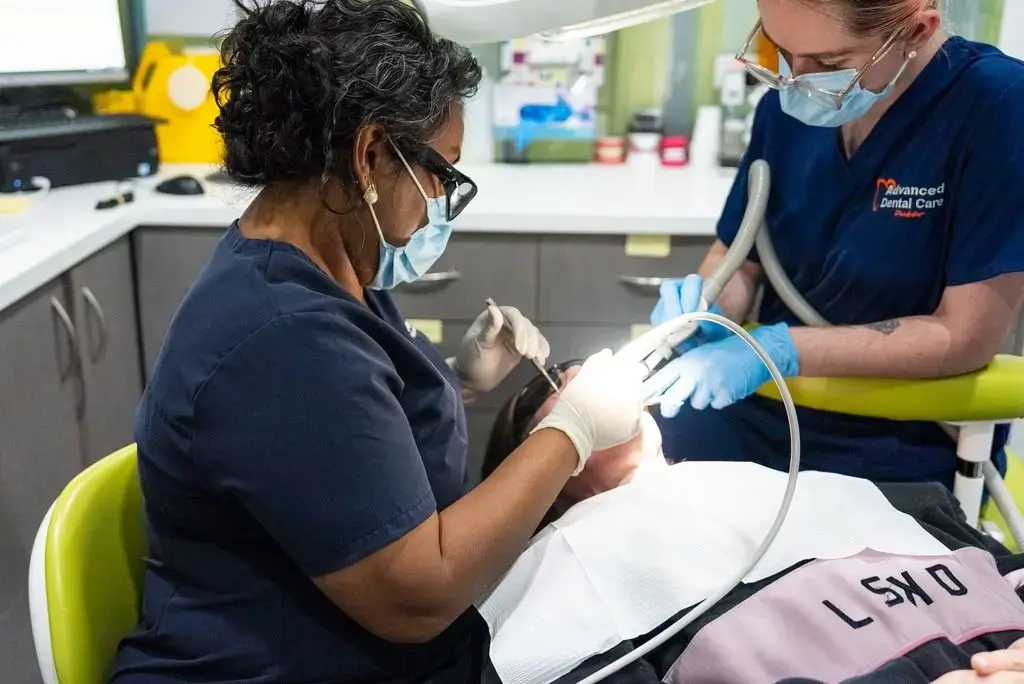
Our principal dentist, Dr Priya Shanmugalingam, has completed well over a thousand wisdom tooth extractions across more than twenty years of practice, so very little about a recovery catches her off guard. Families across Dubbo and the Central West have come to trust her gentle, detailed approach, and we’d far rather see you for a five-minute reassurance visit than have you sit at home worrying about an ache that won’t budge.
If you’re still sore at day ten and want some peace of mind, get in touch with our friendly Dubbo team, and we’ll arrange a time to take a look.